August 13, 2025 — However one chooses to describe the goal of emissions reduction, sustainability efforts and net zero targets, at its core, it’s about reimagining the way we construct today’s buildings to design for a more efficient tomorrow.
While there’s no one-size-fits-all formula or instruction manual to achieving it, what we do know is that progress depends on collaboration and strategic partnerships.
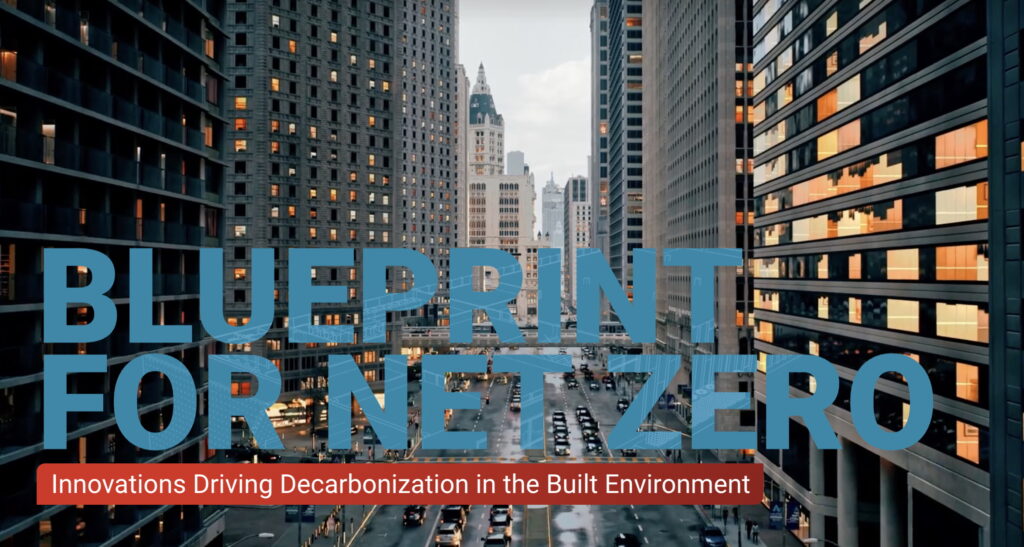
This much was clear from insights gathered from Xylem’s new industry report, Blueprint for Net Zero: Innovations Driving Decarbonization in the Built Environment, featuring expert industry voices weighing in on what’s needed to help guide the commercial building sector to a net-zero and decarbonization reality.
Reducing emissions starts with existing buildings
With nearly two-thirds of today’s buildings expected to be in operation in 2050, retrofitting is essential to meet climate targets. Doing so begins with recognizing existing buildings not as obstacles but as opportunities for significant emissions reductions.
“When we think about decarbonizing buildings, the primary opportunity really lies in identifying ways to make upgrades and enhancements with what is at hand,” remarked Jim Nolan, a market development manager with Xylem who frequently presents on decarbonization and sustainable building practices.

Such strategies include updating older infrastructure with modern, energy-efficient equipment like smart technologies that can inform asset management and overall health and finding creative ways to capitalize on existing infrastructure, such as capturing waste reuse from one building to be used in another.
Leading the charge with a holistic approach
As the HVAC and plumbing industry continues to evolve, a holistic approach is emerging as the foundation for future decarbonization efforts. Where traditional approaches focused on making individual components like pumps or HVAC units more efficient, now the focus is on holistic, end-to-end system optimization. From system-based thinking to smart controls to low-carbon technologies, emerging strategies are increasingly focused on practical, scalable solutions that emphasize sustainability and serviceability.
Industry professionals set the pace for net zero
While regulations at the state and local level continue to shape the pace of emission reduction efforts, building owners and operators are setting their own ambitious sustainability goals to drive lasting change in the commercial buildings sector.
For instance, responding to stricter energy and environmental codes, like New York City’s Local Law 97, which requires large buildings over 25,000 square feet to reduce emissions 40% by 2030 and 80% by 2050, building owners and operators are investing in high-performance HVAC and plumbing systems and monitoring controls to optimize building performance and reduce energy consumption.
Findings from Blueprint for Net Zero also illuminated the increasingly important role that all stakeholders play. Everyone — from architects to engineering firms to educators — has a stake in the game and are equally seeking out solutions that empower more efficient system design.
Green building certifications drive accountability
Green building certifications establish a shared language of accountability. They translate complex environmental and performance standards into actionable, third party-verified goals. In doing so, they help buildings not only meet regulations—but become leaders in the transition to a more sustainable, efficient and equitable built environment.
Pursuing certifications such as Fitwel, Green Globes, LEED and Well compel developers, building owners and managers to align with industry-leading sustainability and performance standards. Regular benchmarking helps tracks progress, reveal gaps and build momentum for ongoing improvement.
Collaboration accelerates change
Advancing progress requires engaging all stakeholders—owners, engineers, contractors and policymakers—in a culture of sustainability. Engaging diverse stakeholders early in the planning and design process accelerates change by combining technical know-how, policy alignment, workforce development and collective action toward a net-zero future.
Joint efforts can also help create greater demand for low-carbon products and services within the commercial building sector, influencing manufacturers, suppliers and developers to prioritize sustainability.
Education is the cornerstone of decarbonization
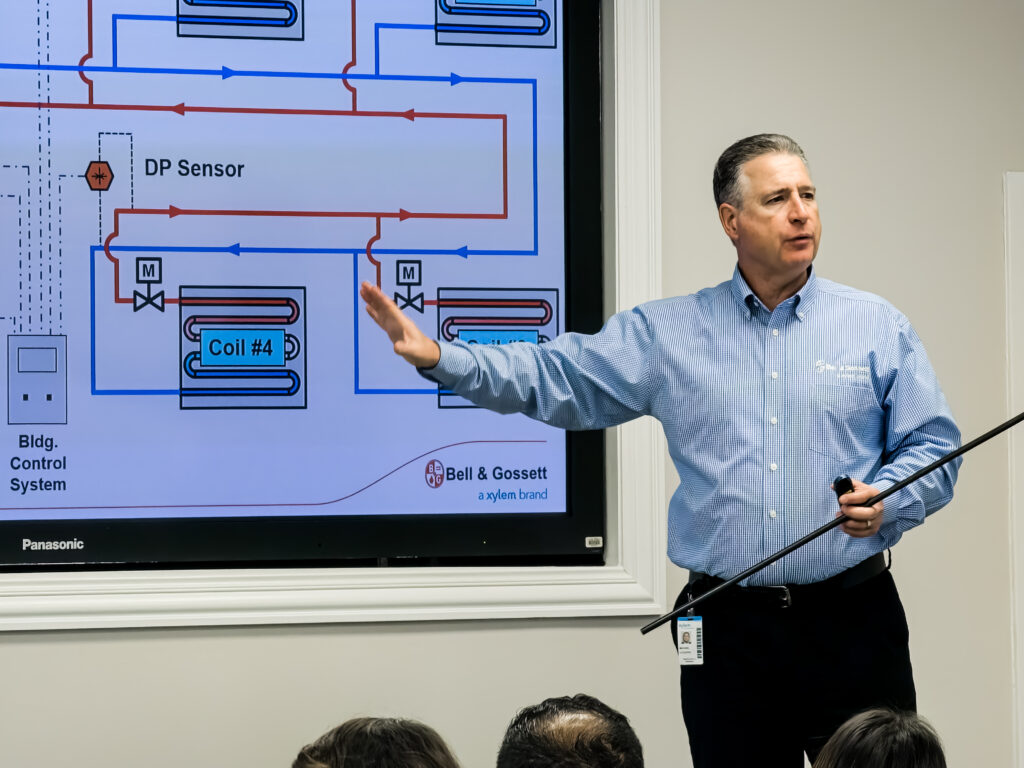
Collaborations among industry stakeholders in the commercial building sector are helping to fill the talent gap in sustainable building trades. Within the HVAC and plumbing space alone, there’s currently a shortage of 110,000 HVAC technicians. In response, businesses, educational institutions and industry associations are partnering together on workforce development initiatives to supply a diverse pipeline of people qualified to meet the evolving demands of building sustainably.
“It’s the younger generation that’s really taking this and moving it forward. You’re seeing the next generation of homeowners, or even rental properties, much more attuned to how that space is conditioned and the water’s heated,” observed Bell & Gossett manufacturer representative FIA Inc. President Andrew Pratt.
To further bridge the knowledge gap and empower future professionals for net-zero readiness, the commercial building sector must also embrace an ever-evolving learning environment. For instance, as AI becomes more engrained in daily life, Xylem is exploring how we can integrate the technology into Bell & Gossett’s popular Little Red Schoolhouse, while the Traveling Little Red Schoolhouse program introduces thousands more professionals each year to hands-on learning.
Explore Xylem’s full Blueprint for Net Zero: Innovations Driving Decarbonization in the Built Environment report for additional strategies and insights essential to fostering resilient, sustainable communities and advancing a net-zero future.